
Walking Water Rainbow Science Experiment for Kids
Ever wondered how water can “walk”? Try this magical rainbow experiment!
Science experiments don’t have to be complicated to be fun and educational! This walking water science experiment for kids is a simple but fascinating way to explore capillary action, color mixing, and the properties of water. Perfect for preschoolers and elementary students, this hands-on activity encourages curiosity and critical thinking.
In this guide, you’ll find step-by-step instructions, the science behind the experiment, and ways to extend the learning experience!
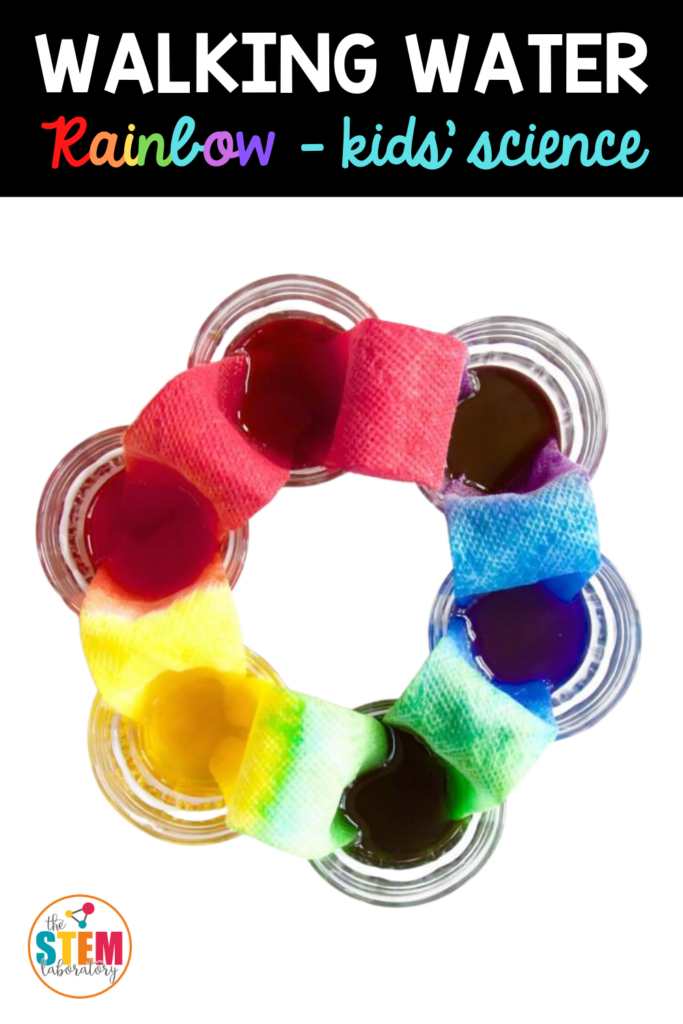
What is the Walking Water Science Experiment?
The walking water science experiment for kids is a simple demonstration of capillary action—the process that allows water to move through materials like paper towels, plants, and even your own body’s veins! By using colored water and paper towels, kids will watch in amazement as water “walks” from one cup to another, creating a beautiful rainbow effect.
This experiment is ideal for preschoolers, kindergarteners, and early elementary students, offering a fun, visual way to introduce key scientific concepts.
Materials You’ll Need
To set up your walking water rainbow experiment, you’ll need just a few household items:
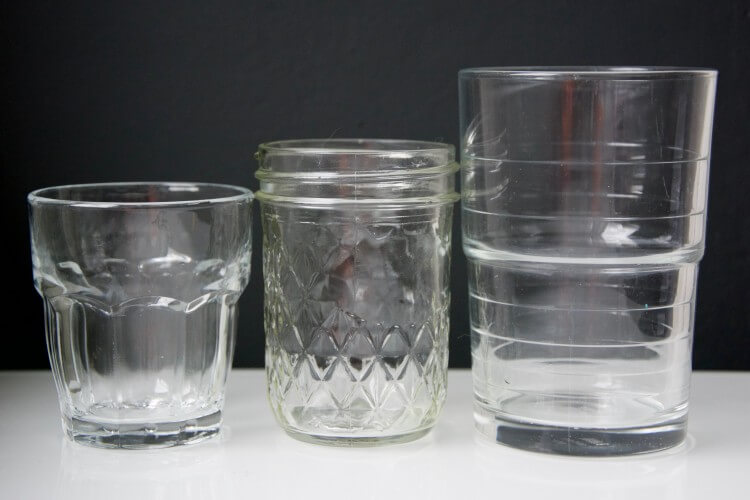
✔ 6 clear cups or jars
✔ Paper towels
✔ Water
✔ Food coloring (red, yellow, and blue)
✔ A stirring stick or spoon
Step-by-Step Instructions: How to Do the Walking Water Experiment
Follow these simple steps to create your walking water science experiment for kids:
Step 1: Prepare the Cups
-
Line up six clear cups in a row.
-
Fill every other cup with water (cups 1, 3, and 5 should have water, while 2, 4, and 6 remain empty).
Step 2: Fold the Paper Towels
-
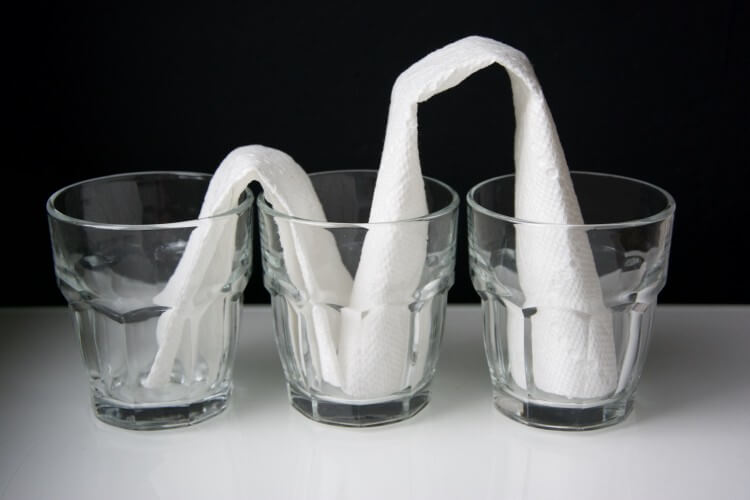
Take a paper towel and fold it lengthwise several times.
-
Place one end of the paper towel in the colored water and the other end in the empty cup next to it.
-
Repeat this process, creating a bridge between all cups.
Step 3: Add the Food Coloring
-
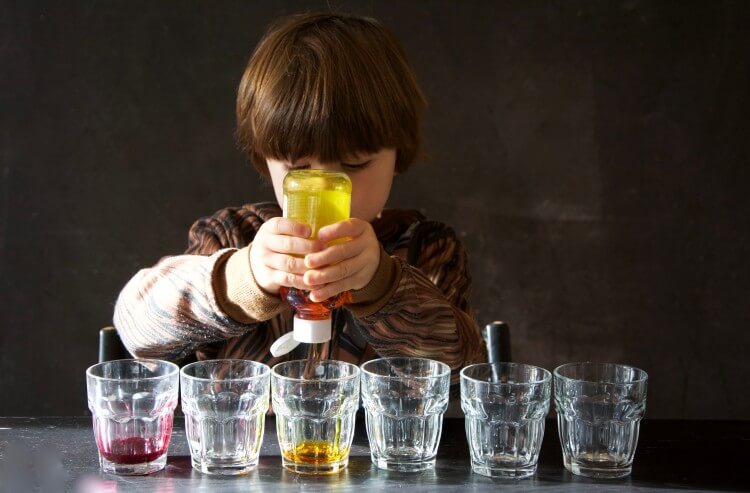
In cup 1, add red food coloring and stir.
-
In cup 3, add yellow food coloring and stir.
-
In cup 5, add blue food coloring and stir.
Step 4: Watch the Water Walk!
-
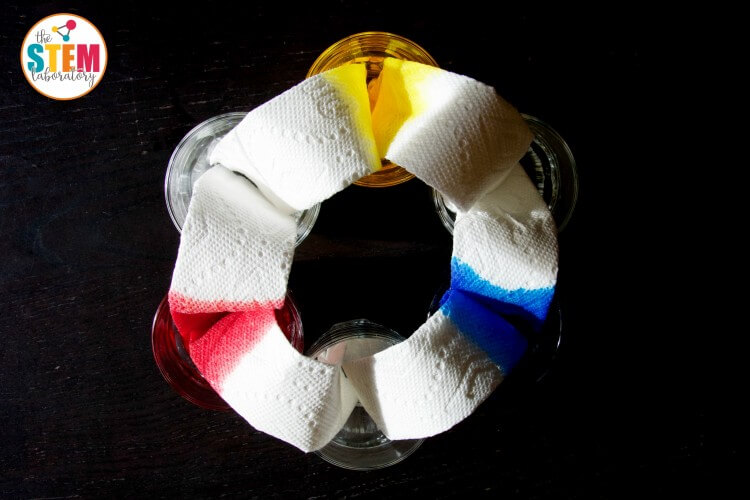
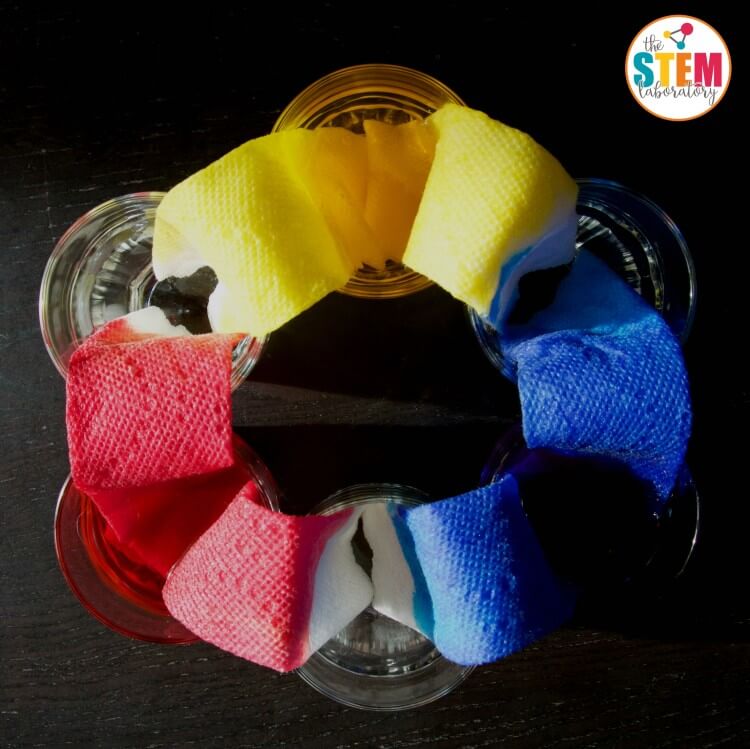
Wait and observe! Over the next 30 minutes to a few hours, you’ll see the water slowly “walking” up the paper towels and into the empty cups.
-
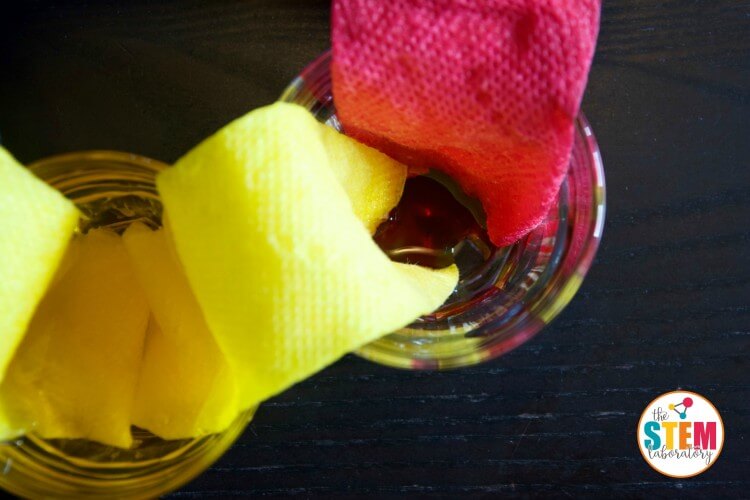
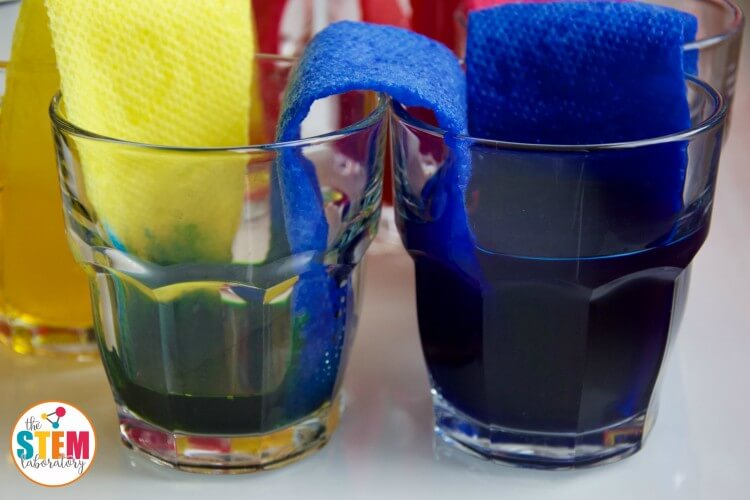
As the colors mix, they form secondary colors (green, orange, and purple), creating a rainbow!
The Science Behind It
This rainbow science experiment is as magic as the science behind it. The colored water travels up the paper towel by a process called capillary action. Capillary action is the ability of a liquid to flow upward, against gravity, in narrow spaces. This is the same thing that helps water climb from a plant’s roots to the leaves in the tree tops.
Paper towels, and all paper products, are made from fibers found in plants called cellulose. In this demonstration, the water flowed upwards through the tiny gaps between the cellulose fibers. The gaps in the towel acted like capillary tubes, pulling the water upwards.
The water is able to defy gravity as it travels upward due to the attractive forces between the water and the cellulose fibers.
The water molecules tend to cling to the cellulose fibers in the paper towel. This is called adhesion.
The water molecules are also attracted to each other and stick close together, a process called cohesion. So, as the water slowly moves up the tiny gaps in the paper towel fibers, the cohesive forces help to draw more water upwards.
At some point, the adhesive forces between the water and cellulose and the cohesive forces between the water molecules will be overcome by the gravitational forces on the weight of the water in the paper towel.
When that happens, the water will not travel up the paper towel anymore. That is why it helps to shorten the length that colored water has to travel by making sure your paper towel isn’t too tall and making sure you fill your colored liquid to the top of the glass.
Rainbow Science Activity Extensions
Turn this demonstration into a true experiment by varying the water level (volume) you start with and seeing how long it takes the water to reach the empty glass.
Or start with the same volume of colored water and change the brand, type (single vs double ply, quilted vs not) or length of paper towel to see how long it takes for the water to “walk” to the empty glass.
You could even use the same volume of water, same length and brand of paper towel but vary the height of the filled glass, by raising them up on books, to see how that affects the speed of the water as it “walks” to the empty glass.
Have you had enough fun with the paper towels? Try using other paper products to see how the type of paper effects the results. Try toilet paper, printer paper, newspaper or a page from a glossy magazine. What do you predict will happen?
Not Working?
If you aren’t seeing much movement within a few minutes, it may be that you need to add more water to your colored water glasses. It really needs to be almost at the top for the water to walk quickly. So try topping off those glasses and seeing if that gets things moving.
If you see the water moving up the paper towel but it seems like it’s taking forever, it may be the type of paper towel you are using. You want a paper towel that will really hold a lot of water. We have used Bounty Select-a-Size and Target’s Up and Up Brand Select-a-Size with success.
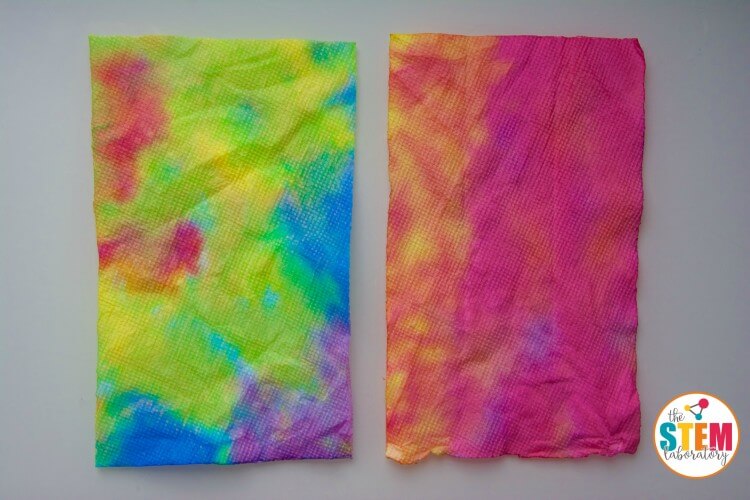
It really is worth the extra effort of trying different cups and paper towels to get this activity to work. And once you have had success, don’t throw out those beautifully-colored paper towels or the colored water! We gently squeezed out our paper towels and let them dry in a heap on a baking sheet. We ended up with gorgeous tie-dyed looking paper towels to use for crafts and we used the leftover water as watercolors for painting with later.
Grab a Record Sheet
Help kids keep track of their results by grabbing our free record sheet! Then grab 30 more jaw-dropping (but easy prep!) science experiments kids will love from our shop.

Bringing It All Together
This walking water science experiment for kids is an easy and exciting way to introduce young learners to science. Whether you’re a teacher, homeschool parent, or just looking for a fun activity, this experiment is a great way to spark curiosity and engage kids in hands-on learning.
Give it a try today, and let us know how your walking water rainbow turns out in the comments!
14 Comments